Certifications that open export markets
Organic, Fair Trade and Global G.A.P explained, and how the right certification unlocks new buyers.
Read more
A look at the highland terroir, varietals and processing that give Kenyan coffee its distinctive bright, complex character.
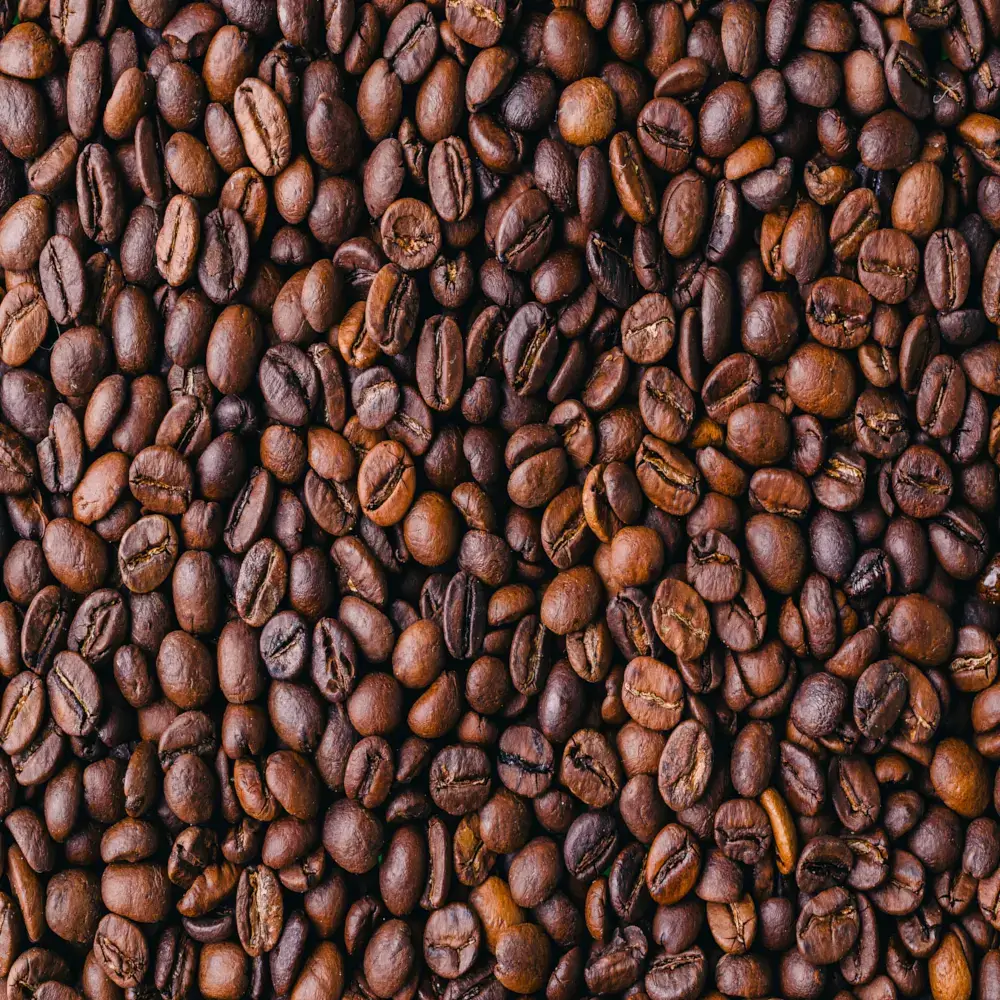
Ask a room of roasters to name a coffee with blackcurrant acidity and a syrupy, tomato-leaf sweetness and most of them will say Kenya without pausing. That reputation is not an accident of marketing. It is the product of a specific set of plant selections, a specific altitude band, a specific way of processing cherry, and a national marketing system that has spent decades rewarding quality in public.
Here is what actually sits behind the cup, and what a buyer needs to understand before writing a specification.
Kenya's flagship selections, SL28 and SL34, were made at the Scott Agricultural Laboratories in the 1930s. Nearly a century later they still account for the overwhelming majority of exported Kenyan coffee. Very few origins anywhere in the world are still leaning on plant material that old, and fewer still would want to. Kenya does because the cup is that good.
SL28 is the more celebrated of the two. It is a tall tree with green leaf tips, it carries large cherries from about the third year, and it mills out cleanly with low milling loss when it has been looked after. Grown high, it produces the intense, structured acidity the origin is famous for. SL34 looks almost identical in the field - the practical way to tell them apart is the leaf tip, which is dark bronze on SL34 rather than green. It is hungrier for nutrition than SL28 and yields slightly less.
Both share an expensive weakness: they are highly susceptible to coffee leaf rust, coffee berry disease and nematodes. That vulnerability is the reason Kenya invested in a second generation of material.
Ruiru 11 was bred for resistance to coffee berry disease and leaf rust, and it is less demanding to grow than the SL selections. Batian came later, combining disease resistance with a cup profile closer to the SL standard, and it has the practical advantage of maturing faster. K7 remains in the mix, particularly at lower altitudes where its rust tolerance matters more than a marginal gain in acidity.
The honest trade-off is this: the resistant varieties dramatically reduce a farmer's fungicide bill and crop risk, while the SL selections still tend to take the highest scores on the cupping table. Most Kenyan farms carry a mix, and a well-managed Ruiru 11 or Batian lot will comfortably beat a neglected SL28 one. If you are sourcing on cup score rather than on variety name, that is the point to hold on to.
You can see how each of these behaves in the cup on our variety pages for SL28, SL34, Ruiru 11, Batian and K7.
Kenya's coffee grows on the volcanic slopes around Mount Kenya and the Aberdares, and westward towards Mount Elgon and the Kisii highlands. The deep red volcanic soils there are acidic, free-draining and unusually rich in phosphorus, and the growing belt sits high - broadly 1,400 to 2,100 metres above sea level, with the most sought-after lots at the top of that range.
Altitude matters because of what cold nights do to a coffee cherry. Cooler temperatures slow the maturation of the fruit, and a cherry that takes longer to ripen accumulates more sugar and more of the organic acids that a roaster later reads as brightness and complexity. It also produces a denser bean, which behaves differently in the roaster and holds up better through shipping and storage.
Kenya's two rainy seasons give it two crops. The main crop is harvested from around October to December and supplies most of the export volume and most of the top lots. The lighter fly crop comes in around June to August. Buyers planning a year-round programme need both in the calendar.
Almost all Kenyan coffee is fully washed, and the washing station method used at Kenyan factories is more rigorous than most. Cherry is pulped, then fermented under water, washed, and in many cases fermented a second time before a final soak in clean water that can run for a further 12 to 24 hours.
Two things come out of that. The extended, water-managed fermentation strips the mucilage completely, which is where the transparent, almost glassy clarity of a good Kenyan cup comes from. And the grading channel used during washing sorts beans by density as they move through the water, separating the heavier, better-developed beans before drying even begins.
The coffee then dries slowly on raised beds, hand-sorted throughout. Slow drying on beds rather than fast drying on concrete protects the delicate aromatics that are the whole point of buying Kenyan.
Grade describes how big the bean is. It does not describe how the coffee tastes.
This is where buyers most often lose money. Kenyan coffee is graded after milling by screen size - the bean is dropped through perforated screens and sorted by what it will and will not pass through. The grade tells you the physical dimensions of the bean and nothing whatsoever about the cup.
| Grade | What it is | What buyers should know |
|---|---|---|
| E (Elephant) | Very large beans, often joined pairs that did not separate | Small volumes, uneven roasting, usually a curiosity rather than a programme coffee |
| AA | The largest standard grade, retained on screen 18 (roughly 7.2 mm) | Commands the highest premiums and the most attention at auction |
| AB | Screens 15 to 16 - the A and B grades combined | The volume backbone of the crop, and frequently excellent value on cup score |
| PB (Peaberry) | A single round bean where the cherry produced one seed instead of two | Roasts evenly because of its shape, often concentrated and intense |
| C, TT, T | Smaller and lighter fractions, including beans separated by air density | Mostly commercial blending grades |
| MH / ML | Mbuni - naturally dried cherry, including strip-picked and fallen fruit | The lowest tier, sold separately from the washed grades |
AA earns its premium partly because large, dense beans genuinely do tend to come from well-managed, high-altitude trees, and partly because the market has decided AA is the prestige grade. But an AB lot from an excellent factory will regularly out-cup an AA lot from an average one, while costing meaningfully less. The disciplined way to buy Kenya is to cup the lot and treat the grade as a packing specification, not a quality certificate.
Most Kenyan coffee is sold through the Nairobi Coffee Exchange. Milled lots are sampled and catalogued ahead of the weekly sale, licensed dealers cup them, and bidding is open and competitive. Because results are published, a factory that produces an outstanding lot sees that reflected in the price it fetches - a feedback loop that has done more to sustain Kenyan quality than any marketing campaign.
Lots are identified by mark: the name of the washing station, or factory, that processed the cherry. Most Kenyan factories are owned by a farmers' cooperative society drawing cherry from hundreds or thousands of smallholders, and the vast majority of Kenya's coffee comes from those cooperatives rather than from large estates. When you see a lot described as, say, a Kirinyaga factory under a named society, you are looking at the pooled work of a whole village.
A direct-trade route outside the auction also exists for buyers who want a continuing relationship with a specific factory. It requires more paperwork and more commitment, but it is the only way to guarantee you get the same mark year after year.
Specify altitude band, crop season, mark and cup score alongside the grade - not the grade alone. Ask which varieties the factory is drawing on and how the mix is trending, because the shift towards Ruiru 11 and Batian is real and it changes the profile over time. Sample before you commit, and sample from the actual lot rather than a type sample.
And build the calendar around the main crop. The best Kenyan coffee is finite, it is contested at auction, and the buyers who plan a season ahead are the ones who get it.
Organic, Fair Trade and Global G.A.P explained, and how the right certification unlocks new buyers.
Read more
How environmentally responsible practices protect the land while delivering consistent, high-quality produce for export.
Read moreOur team is happy to share insight on products, markets and certifications for your needs.