Certifications that open export markets
Organic, Fair Trade and Global G.A.P explained, and how the right certification unlocks new buyers.
Read more
How environmentally responsible practices protect the land while delivering consistent, high-quality produce for export.
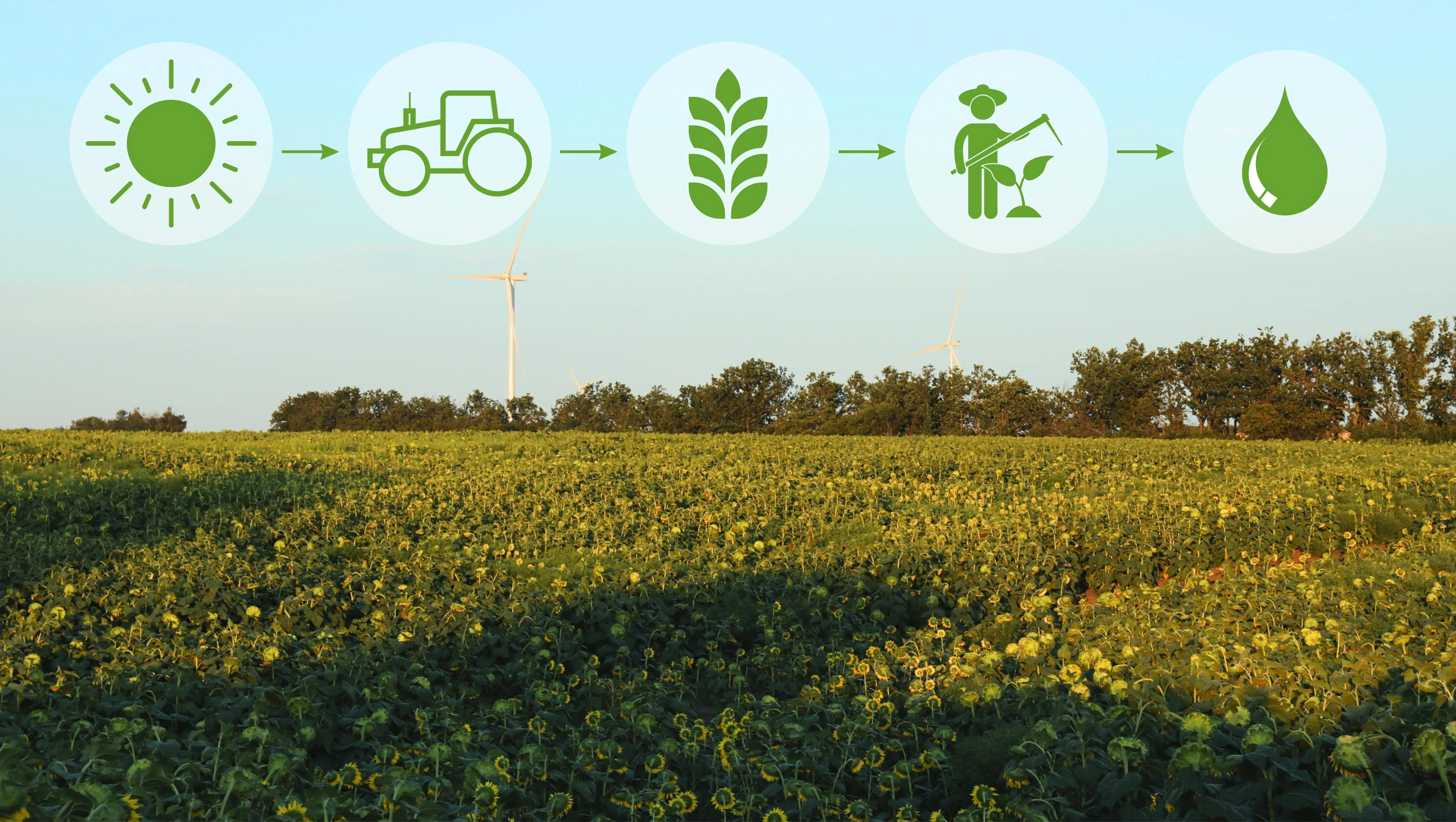
For most of the last two decades, sustainable sourcing was something a buyer chose. It sat in the corporate responsibility report, it justified a certification logo on the pack, and it was optional. That era is over. From the end of 2026, for a long list of products entering the European Union, proving where your produce was grown is not a values statement. It is a customs requirement.
This is a practical guide to what changed, what it means for anyone buying Kenyan produce, and why the disciplines involved happen to make the produce itself better.
The EU Deforestation Regulation - EUDR - covers seven commodity groups: cattle, cocoa, coffee, oil palm, rubber, soy and wood, together with a long list of derived products. To place any of them on the EU market, an operator must show the goods are deforestation-free, legally produced in the country of origin, and covered by a due diligence statement.
"Deforestation-free" has a hard date attached: the land the commodity was produced on must not have been deforested after 31 December 2020. That is not a rolling window. It is a fixed line, and it means the compliance question is about land-use history, not current practice.
The deadlines that matter:
Non-compliance is not a slap on the wrist. Penalties include fines of at least 4 per cent of an operator's annual EU turnover for serious breaches, confiscation of the products and the revenue from them, and exclusion from public procurement.
The due diligence statement filed for each consignment has to include a product description, quantities and customs codes, the country and region of production, evidence of legal and deforestation-free production - and geolocation coordinates for every plot of land the commodity came from.
For a single large estate, that is a straightforward exercise. For a Kenyan coffee cooperative pooling cherry from two thousand smallholders, each farming well under a hectare, it is a mapping project. Kenyan cooperatives have spent the last two seasons doing exactly that work: walking farms with GPS handsets and phone apps, building farmer registries, and tying delivery records to plot polygons so that a bag arriving at the mill can be traced back to the ground it grew on.
There is some relief in the framework. Plots below four hectares can be described with a single point rather than a full polygon, which covers the great majority of Kenyan smallholdings. And micro and small primary operators in countries benchmarked as low risk can file a simplified, one-time declaration rather than repeating full due diligence for every shipment. The Commission published its country benchmarking in May 2025, and the classification of individual origins has been actively contested since - so the sensible operating assumption for anyone sourcing from East Africa today is that full due diligence applies, and to treat any simplification as an unexpected saving rather than a plan.
Traceability has moved from the sustainability report to the customs file.
Here is the part that gets lost in the compliance panic. Nearly everything EUDR asks a supply chain to build is something a quality-focused buyer should have wanted anyway.
A farmer registry with plot boundaries tells you which altitude band each delivery came from. Delivery records tied to plots let you isolate the source of a defect instead of rejecting a whole container. A cooperative that knows which of its members consistently deliver the best cherry can pay them differentially, which is the single most effective quality lever in smallholder agriculture. None of that is a compliance cost. It is a quality system that compliance is paying for.
The same is true of the field practices that sit under the sustainability label:
Kenyan growers are dealing with less predictable rains, hotter dry seasons and pest and disease pressure moving up the hillside as temperatures rise. That is not an abstract environmental concern for a buyer - it shows up as volume volatility and as year-on-year swings in quality.
Drought-tolerant and disease-resistant plant material, shade, water harvesting and diversified cropping are the practical responses. Producers who have adopted them supply more consistently through a bad year, which is precisely when a buyer's contract is most exposed.
If you are sourcing Kenyan produce and want to be genuinely covered rather than nominally covered, put these in the specification:
Ask for these at the point of enquiry, not at the point of shipment. A supply chain that can answer them in a week already has the system built. One that needs three months is telling you something useful.
The regulation has done something the voluntary market never managed: it has made traceability infrastructure worth paying for. The Kenyan cooperatives that invested early now have farmer registries, mapped plots and digital delivery records - and those are the suppliers who will still be shipping to Europe in 2027.
Sourcing responsibly and sourcing well have stopped being separate conversations. The producer who can tell you exactly which hillside your consignment came from is, almost without exception, the producer who can tell you why it tastes the way it does.
Organic, Fair Trade and Global G.A.P explained, and how the right certification unlocks new buyers.
Read more
A look at the highland terroir, varietals and processing that give Kenyan coffee its distinctive bright, complex character.
Read moreOur team is happy to share insight on products, markets and certifications for your needs.