Certifications that open export markets
Organic, Fair Trade and Global G.A.P explained, and how the right certification unlocks new buyers.
Read more

Why global demand for Kenyan avocados keeps climbing, and what it means for producers and buyers.
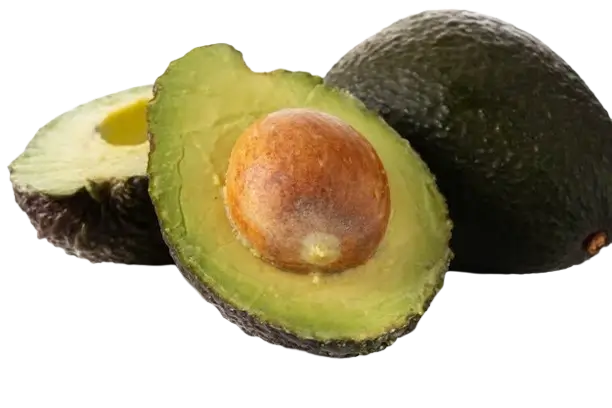
Twenty years ago Kenyan avocado was a domestic crop with an export sideline. Today it is one of the country's most valuable horticultural exports, it has opened a market in China that almost no African origin has access to, and it is being regulated more tightly every season - because the industry worked out that the fastest way to lose a premium market is to ship fruit that is not ready.
This is the state of the trade and what it means if you are buying.
Kenyan avocado production reached a record level in 2025, with output estimated at around 694,000 tonnes. Export volume for 2025 was put at roughly 121,000 tonnes with a value of about USD 159 million, making avocado Kenya's sixth-largest agricultural export by value.
The gap between those two figures is the story of the sector. Most Kenyan avocado is still consumed domestically or lost to poor post-harvest handling. The export share is growing, but the headroom is enormous, and that is where the investment is going.
Hass dominates. It accounted for more than 74 per cent of Kenyan production in 2025 and a higher share still of exports, because it is the variety global retail has standardised on. Its thick, pebbly skin darkens as it ripens - a built-in ripeness indicator - and it travels well, which matters enormously for an origin that ships most of its fruit by sea.
Fuerte is the significant second variety: smoother, thinner green skin, a slightly lighter flavour, and an earlier season that lets exporters open the year before Hass volumes arrive. Its thinner skin makes it more fragile in transit, so it tends to serve regional and Middle Eastern markets rather than long sea routes. Pinkerton and Jumbo appear in smaller volumes.
The European Union remains the anchor market, with the Netherlands, France and Spain the main entry points - the Dutch volume in particular is substantially re-exported onwards. The Middle East is the second bloc, valued for shorter transit times and less demanding specifications.
Then there is China, which is the genuinely interesting development. Kenya secured market access for fresh avocado and has built the position quickly: China imported 3,997 tonnes of Kenyan avocado in 2025, making China the third-largest destination for Kenyan fruit after the EU and the Middle East. Kenya has in turn become one of China's leading avocado suppliers, behind the South American origins.
The volume is still modest next to the European trade, but the strategic value is high. Access is governed by a bilateral protocol with strict phytosanitary conditions and registered orchards and packhouses, which means the barrier to entry is real - and Kenya is on the right side of it while most competitors are not.
Dry matter is the gate. Everything else in the specification is downstream of it.
An avocado does not ripen on the tree. It matures on the tree, accumulating oil, and only begins to ripen once it is picked. If it is picked too early it will never ripen properly - it stays rubbery, tastes of nothing much, and shrivels rather than softening. The measure of maturity is dry matter content, which tracks oil accumulation.
Kenya requires exported avocado to meet a minimum dry matter threshold, broadly in the 20 to 24 per cent range depending on variety, with 24 per cent applied as the standard for Hass. Fruit below the line does not ship.
This is enforced, and increasingly aggressively. The Agriculture and Food Authority has repeatedly suspended harvesting for export at the tail of the season, when prices tempt growers to strip trees of immature fruit, and reopened it only once maturity testing across the production zones showed the crop had caught up. In recent seasons AFA has also required mandatory packhouse inspection for all fresh avocado destined for export, with exporters applying in advance of shipment, and exporters caught harvesting immature fruit face revocation of their licence.
The reasoning is straightforward commercial self-defence. Rejection rates for immature fruit in premium markets have run as high as 30 per cent, with the associated losses estimated in the billions of shillings a year. One bad season of rubbery Kenyan Hass on European shelves would cost the origin far more than the fruit was worth.
The main Kenyan Hass export season broadly runs from around March or April through to September or October, with the exact opening date set each year by maturity testing rather than by the calendar. Fuerte comes earlier. A limited late and off-season volume exists but is tightly controlled.
Most export fruit moves by sea in refrigerated containers, typically at around 5 to 6 degrees Celsius with controlled atmosphere on the longer routes, out of Mombasa. Transit to Europe is in the region of three to four weeks, and to China longer. Air freight exists for early-season and premium consignments but the economics only work at high prices.
The consequence is that the cold chain has to be unbroken from the orchard onwards. Field heat removed promptly, temperature held through packing and loading, and no gaps at transhipment. Most avocado quality claims trace back to a cold chain failure rather than to the fruit itself.
The sector is overwhelmingly smallholder. Tens of thousands of Kenyan farmers grow avocado on small plots in Murang'a, Kiambu, Nyeri, Kisii, Meru, Embu and the Kericho and Nandi highlands, frequently intercropped with coffee or tea. Fruit is aggregated by collection agents or producer groups and moves to a licensed packhouse for grading, sizing and packing.
That structure is why compliance investment matters so much. GLOBALG.A.P. group certification, farmer training on when to pick, and traceability from orchard to carton are the mechanisms that turn a fragmented smallholder base into a supply chain a European retailer will contract with. It is also why the professionalisation of the sector shows up directly in export growth figures.
Specify dry matter, not just size and count - and ask for the maturity test results for the actual harvest window your fruit came from. Confirm the packhouse is registered and, if you are buying for EU or UK retail, that the group holds current GLOBALG.A.P. certification.
Plan around the maturity-driven season opening rather than a fixed date, because the opening moves and a contract that assumes otherwise will be short. Agree cold chain parameters and require temperature logging through the container. And be realistic about variety: if you want long sea transit and retail shelf performance, you want Hass, and Fuerte is a different proposition for a different route.
Kenya's avocado sector has spent the last several seasons deliberately tightening quality control while volumes climbed. For a buyer, that combination - growing supply plus hardening standards - is about as good as an origin gets.
Organic, Fair Trade and Global G.A.P explained, and how the right certification unlocks new buyers.
Read more
How environmentally responsible practices protect the land while delivering consistent, high-quality produce for export.
Read moreOur team is happy to share insight on products, markets and certifications for your needs.